Waking up to the water is the reason most people buy on the coast. The view, the breeze, the walk to the beach.
The house sees it differently. Every day it lives with salt in the air and moisture that rarely lets up. Over time that shows up as rusted fittings, failing appliances, foggy glass, damp floors and mould in the corners. Few people factor that cost in when they plan a home by the sea.
If you’re building a home on the Gold Coast, or anywhere close to the water, here’s what salt air and humidity do to a house, and how a high-performance home is built to handle them.
Considerations
- Within about 200 metres of a surf beach is the harshest corrosion category in Australia. Salt can carry up to around 10 km inland.
- Salt does most of its damage when it’s wet, so humidity and condensation are half the problem.
- A high-performance home controls the air inside: an airtight building, filtered fresh air and steady temperatures that keep inside surfaces dry.
- Outside, material choice still matters. Inside is where high performance changes the picture.
What does salt air do to a house?
Salt carried on sea breezes settles on every surface it reaches. It draws moisture out of the air and holds it against whatever it lands on, which is why metal corrodes so much faster on the coast.
Australia classifies air corrosivity by location under the standard AS 4312. As a guide from the Galvanizers Association of Australia sets out:
- Within 200 m of rough seas and surf beaches: the highest category, C5 (very high).
- From 200 m to 1 km inland: C4 (high).
- From 1 km to around 10 km inland along surf coasts: C3 (medium).
Prevailing winds can push salt further. Many Gold Coast beachside suburbs sit inside these bands.
Inside a typical coastal home, salt finds its way to:
- Appliances: hinges, seals, rangehood filters and the electronics inside them.
- Tapware and fixings: pitted chrome, stiff hinges and seized drawer runners.
- Window and door hardware: handles, locks and tracks.
- Benchtops and floors: a salty film that holds moisture against stone and timber.
- Glass: a haze that’s hard to keep clean, and water on cold panes.
Humidity is the other half of the problem
The Gold Coast is humid for much of the year. Salt does its worst work when it’s wet, and the most common way water ends up on surfaces inside a home is condensation.
Condensation needs two things: humid air and a cold surface. When warm, moist air touches something colder than its dew point, the moisture comes out as water. That might be a window on a winter morning, a wall near the air conditioner, or the back of a wardrobe on an outside wall.
On the coast, that water can carry salt. It sits on glass, benchtops, floors and anything with metal in it. Left long enough, it also feeds mould.
In most homes, outside air leaks in through gaps around windows, doors, downlights and floors. You can’t control how much salt or moisture comes with it.
The real cost of the seaside dream
Few people add it up, but the cost comes from a few directions.
- Replacing things sooner. Appliances, tapware, hardware and window parts that would last for years inland can wear out much faster near the surf.
- More maintenance. Rinsing, resealing, repainting and treating mould become part of the routine.
- Running costs. Air conditioners and dehumidifiers working hard to make a leaky house comfortable.
- Health and comfort. Damp air, mould and musty rooms aren’t what anyone pictures when they buy by the sea.
None of this means you shouldn’t build on the coast. It means the house needs to be designed for where it is.
How a high-performance home handles the coast
A high-performance home is designed to control the environment inside, whatever is happening outside. On the coast, that makes a real difference.
An airtight building
The building is wrapped in an airtight membrane and tested with a blower door during construction. If the smoke moves, there’s a gap, and we fix it. When air can’t leak in through gaps, salty, humid air can’t drift in either. Read more in What Is an Airtight Home?
Filtered fresh air with MVHR
Every TZO high-performance and Passive House build uses Mechanical Ventilation with Heat Recovery (MVHR). This is how we manage the air quality inside.
The MVHR system brings fresh outside air in through filters and draws stale, moist air out of the kitchen, bathrooms and laundry. It runs quietly at a steady rate, all day and night. On the way through, a heat exchanger passes the warmth or coolness of the outgoing air to the incoming air, so the house gets fresh air without losing its comfortable temperature.
On the coast, that means filtered fresh air around the clock, without opening a window to the salt.
Humidity under control
In a subtropical climate, moisture works the opposite way to Europe. It’s trying to get in from outside. A high-performance home on the coast is designed for that, with ventilation and dehumidification that manage the moisture in the air. The Australian Passive House Association explains this well in Yes, Passive House Can Exist in the Subtropics.
Warm, dry surfaces
Continuous insulation, high-performance windows and no thermal bridges keep inside surfaces close to room temperature. Nothing drops to the dew point, so condensation doesn’t form on glass, walls or benchtops. No water means no salty film, and nothing for mould to grow on.
Steady temperatures
Because the temperature inside stays steady, the house isn’t swinging from hot to cold every day. That’s easier on finishes, joinery and the people living there.
Outside, the coast still calls for the right materials: fixings, coatings and cladding suited to the corrosion zone. Inside is where high performance changes the picture.
Planning a home on the coast? Questions to ask your builder
- Which corrosion category is my block in, and what does that mean for external materials and fixings?
- How will the building be made airtight, and will it be tested?
- How does fresh air get in, and is it filtered?
- How will humidity be managed through summer?
- Where are the thermal bridges, and how are they dealt with?
- Which windows are specified, and will the inside of the glass stay warm enough to avoid condensation?
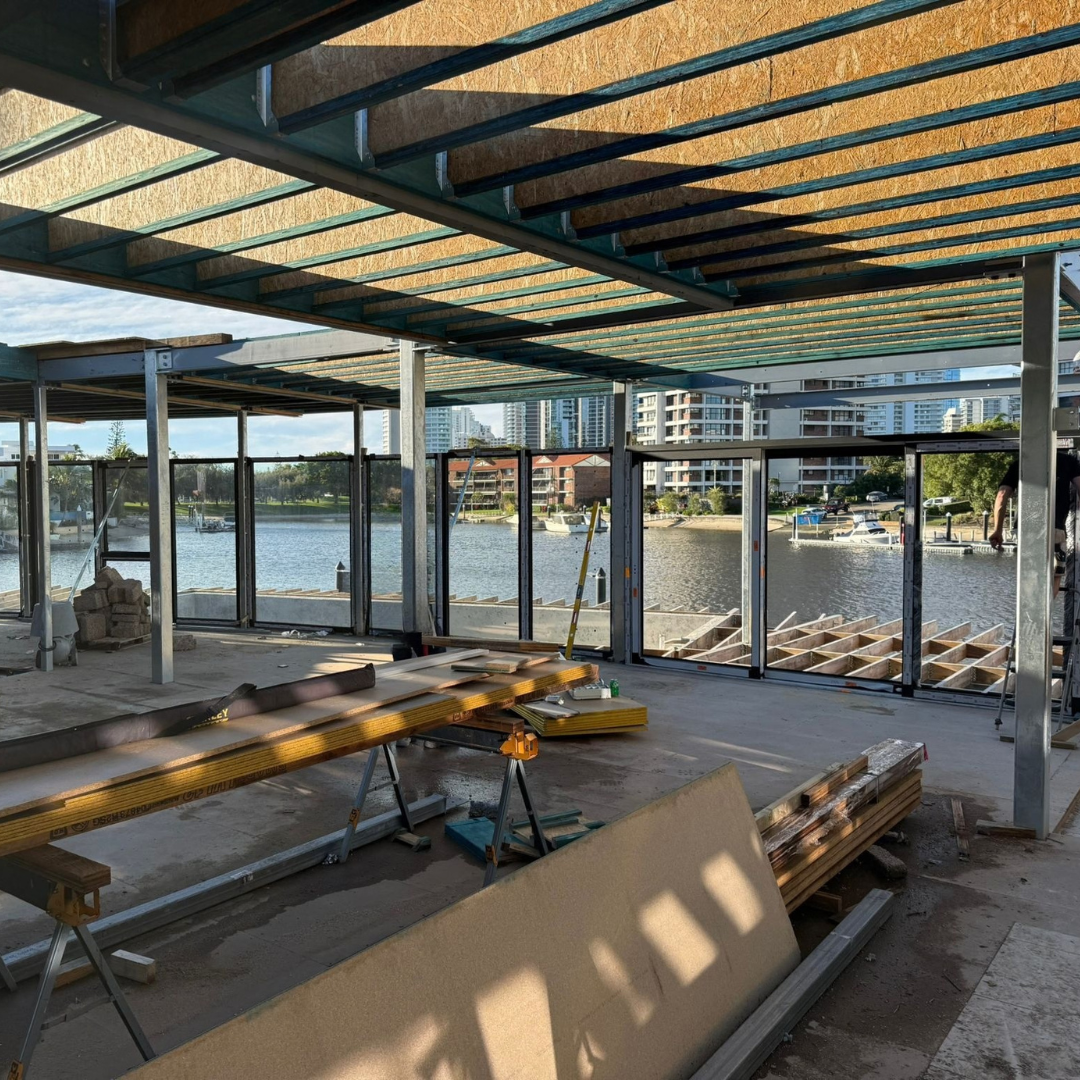
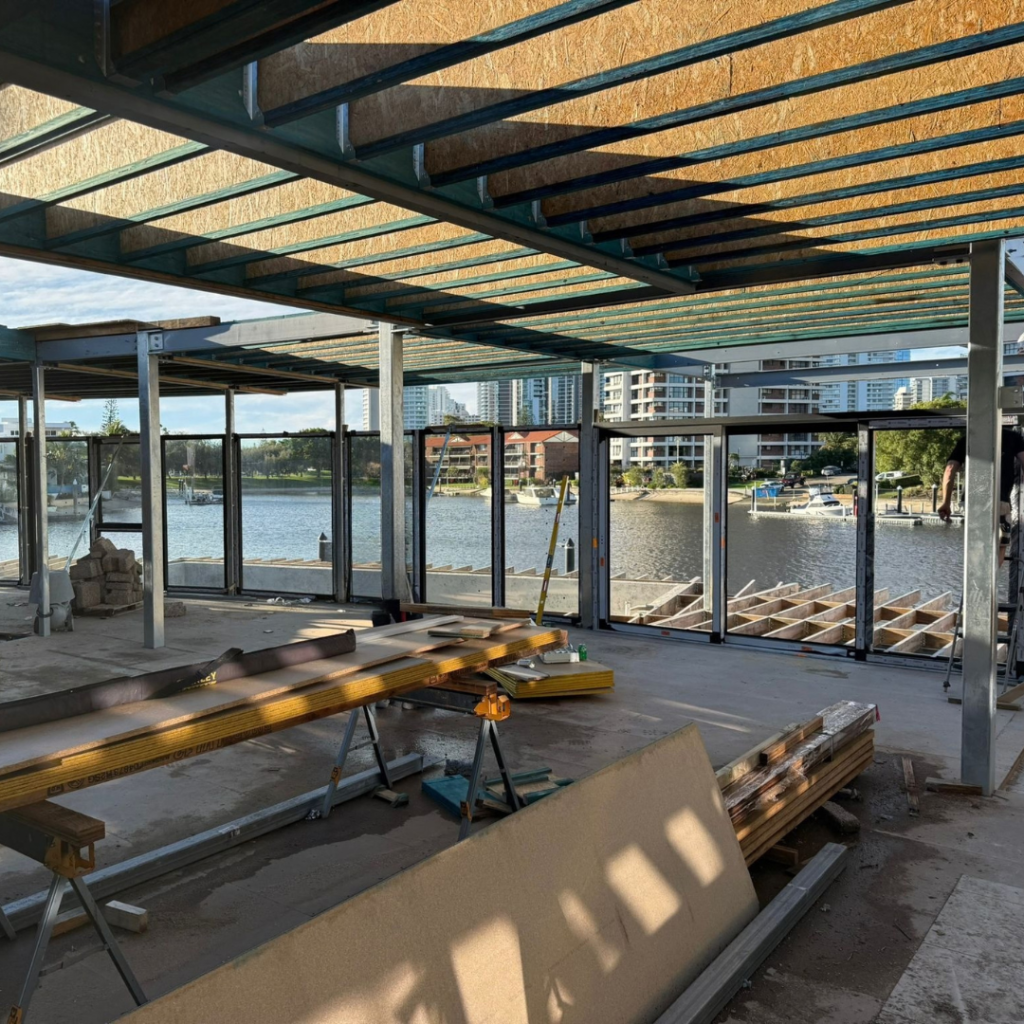
Building on the canals at Surfers Paradise
We’re building on the canals in Surfers Paradise now. The home is designed to the same high-performance principles as every TZO build.
We design it. We build it. We test it.
If you’re planning a new home in Queensland, our Brisbane team also builds on the Gold Coast. Building on the coast? Start with a conversation.
Frequently asked questions
How far inland does salt air affect a house?
Under Australia’s corrosivity guidance (AS 4312), the harshest category applies within about 200 m of surf beaches. High corrosivity runs out to about 1 km, and medium corrosivity to around 10 km inland along surf coasts. Prevailing winds can carry salt further.
Why do coastal homes get condensation and mould?
Condensation forms when humid air meets a surface colder than its dew point. Coastal air is often humid, and leaky homes let it in. Water on cold glass and walls can carry salt, and if it sits there, it feeds mould.
Can a Passive House work in a humid climate like the Gold Coast?
Yes. In the subtropics, a Passive House is designed for moisture coming from outside, with an airtight building, controlled ventilation and dehumidification. The Australian Passive House Association has documented subtropical examples.
Does a high-performance home stop salt corrosion?
Not on the outside, so external materials still need to suit the corrosion zone. Inside, an airtight building, filtered ventilation, and warm, dry surfaces greatly reduce the salt and moisture that reach your fittings and finishes.